← Home About Archive Photos Also on Micro.blog
  • What could 15 minutes do in your life?

    → 11:00 PM, Jan 28
  • 5 Questions for Your Next Opportunity

    So here are five questions to consider:

    1. Does this opportunity align with my core values and long-term vision?

    Will this opportunity support the person I want to become or the life I want to create? You have to sleep at night knowing you’re not selling out, or selling your soul.

    2. How will this opportunity impact my energy and well-being?

    Does it feel life-giving, inspiring, or draining? Will it support my mental, physical, and emotional health?

    These considerations have no price tag.

    3. What is the potential for growth and learning?

    Will this challenge me, stretch my abilities, and provide opportunities for growing in curiosity?

    Sadly, many jobs leave little room for personal growth and lifting the lid on our leadership.

    4. Does this contribute to the impact I want to have in the world?

    Will this help me make a difference? Will this deepen my relationships or connections with others?

    Does this company, organization, or opportunity make the world a better place, or the opposite?

    5. Does this foster collaboration, community, or meaningful connections with like-minded people?

    The people we work with bring life, or don’t. Our community matters.

    These questions take us deeper into considering opportunities.

    There are more factors beyond the monetary.
    → 9:52 PM, Jan 27
  • Whatever you think, be sure it is what you think;

    Whatever you want, be sure that it is what you want;

    Whatever you feel, be sure that is what you feel.

    -T.S. Eliot

    → 4:23 PM, Jan 24
  • Time Coins

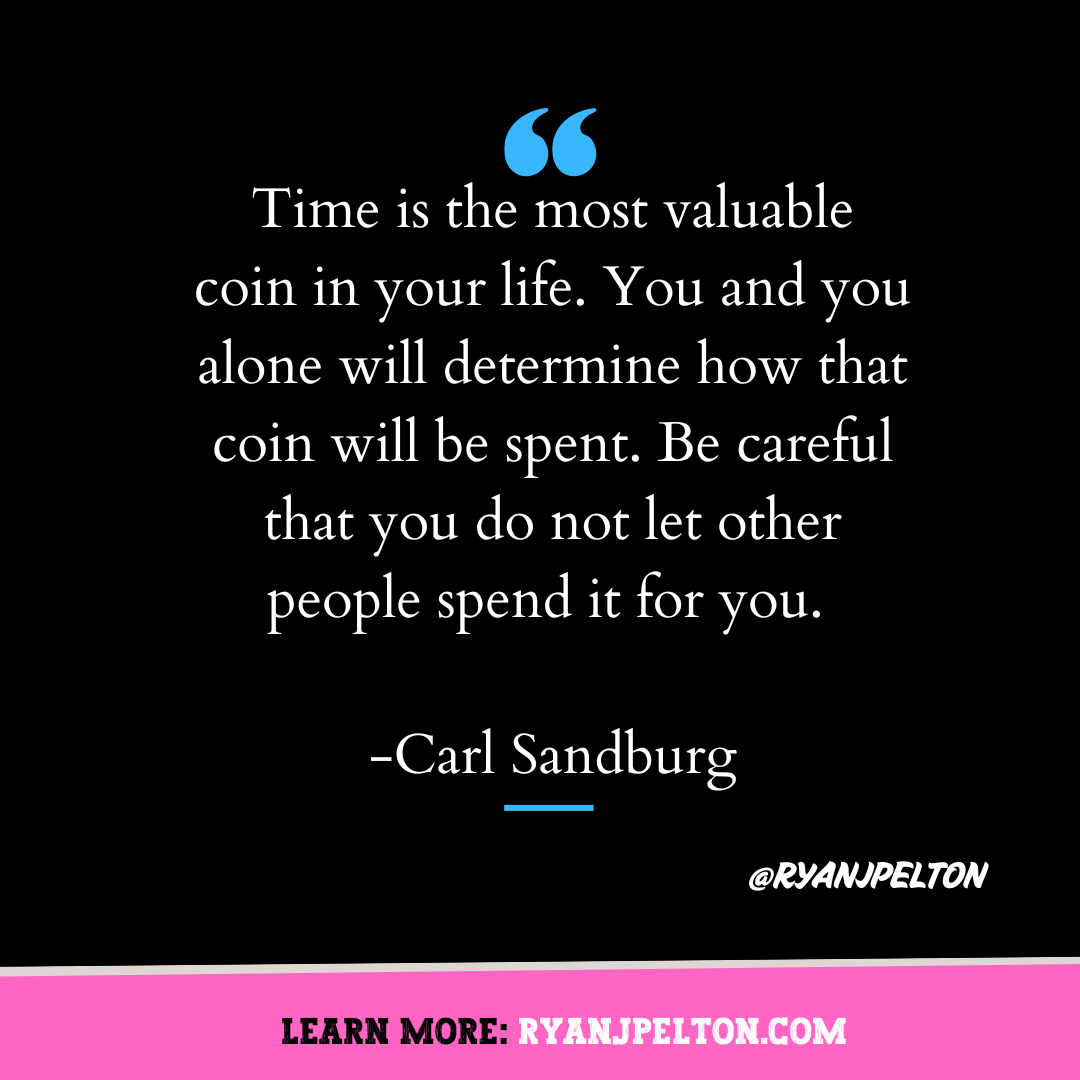
    “Time is the most valuable coin in your life. You and you alone will determine how that coin will be spent. Be careful that you do not let other people spend it for you.” -Carl Sandburg

    Every human has a finite amount of time. How will you spend it?

    Most people spend their “coin” of time on the expectations of others. We make things urgent, which are not, and do “busy work,” never getting meaningful results in your life, leadership, and art.

    How can we break the curse?

    Try this simple framework for managing your tasks, responsibilities, and time:

    1. Give the task a number of importance:

    Is this a 10 and urgent?

    Is it a 1, and can be done next year?

    1. Give the task a timestamp and/or deadline:

    Does this need to be completed by tomorrow, the end of the week, next month, or next year?

    Make a deadline.

    1. Tell your tasks where to live, and a why:

    Now, you’re going to examine the urgency of these tasks. The ones needing immediate attention give them a place to live.

    Talk to them:

    *My task will get my attention on: {deadline}

    *You will get my attention on this date because: {my why?}

    Pay attention to your why because it reveals importance of the task, or maybe it’s not upon further reflection.

    It also gives you a renewed motivation to do the task.

    Example: My book project will get 500 words added by Friday. Why? I’ve always wanted to write a book, and help people with my ideas.

    Example: My taxes will be paid by April 15th. Why? It’s only January, I don’t have the money, and it’s not urgent.

    Talking about your tasks, responsibilities, and work can become a superpower. A powerful tool for relieving stress, worry, and living an intentional and purposeful life on your terms.

    Not the dreams and expectations of others.

    Try it and let me know how it goes?

    -Ryan

    → 11:06 AM, Jan 23
  • We don’t grow because we don’t have a plan.

    No person, company, or organization drifts into growth.

    What is your plan?

    → 11:13 PM, Jan 22
  • You choose what you consume.

    The algorithm only gives what you want.

    Algorithms only reveal, and exasperate what we choose to consume, click, and watch.

    Tell the algorithm who is boss.

    The algorithm is not your friend.

    → 11:01 PM, Jan 21
  • Words Matter

    Words matter.

    Words define leadership in a positive or negative light.

    You can’t separate out words, leadership, character, and vision for where we desire to take people.

    Today is Martin Luther King Jr. Day. A day to remember one of the most remarkable leaders in recent history.

    Ironically, today is also Inaguration Day of the first convicted felon in Presidential history Donald Trump.

    One leader called Haiti, El Salvador, and African countries s-thole countries. And asked:

    _ “Why are we having all these people from s–thole countries come here?” Why do we need more Haitians? Take them out.”_

    (Source: Washington Post, People Magazine)

    Another leader, Martin Luther King Jr., asked:

    “Life’s most persistent and urgent question is, ‘What are you doing for others?'"

    (Source: Country Living Magazine)

    You decide which leader was/is committed to the benefit of others?
But I share these quotes because of these truths:
Words create new worlds. Words make better humans, thriving communities, and hope for tomorrow. Words can bring life, or death.

    Words are fuel for the leadership we need at this moment, or any moment.

    This is not a question of who is flawed, or less flawed. We all are. But rather, despite our flaws, who is going to do the most for others? Who will bring words of life and hope?

    Who will have the courage to make the art needed for the moment? Who will lead with words that unite and don’t divide? Words littered with hope and inspiration and positivity for a better future.

    History is an excellent teacher of what this kind of leadership looks and feels like.

    We only need eyes to see.

    -Ryan

    → 9:40 AM, Jan 20
  • The Character Void

    “We set young leaders up for a fall if we encourage them to envision what they can do before they consider the kind of person they should be.” -Ruth Haley Barton

    Many young folks (humans) want money. Fame. Influence.
    Opportunity. Meaningful work.

    Striving to find the Easy Button for such things.

    But what happens if/when these things come, we aren’t the people to handle such blessings?

    We live in a time when character is optional. Moral integrity a side show to whomever can yell the loudest.

    And yet, history and experience and ancient texts will tell us… you can’t separate character and competence.

    When competence, skill, opportunity, platform, or influence outpaces character, it’s a time bomb waiting to explode.

    Character eats competence all day long.

    And beware of the smokescreen that a competent person equals a person of character.

    History is not kind to this oversight.

    → 5:13 PM, Jan 18
  • John C. Maxwell suggests three questions every person should ask to go further and deeper in life and leadership:

    1. What makes you cry?

    2. What do you sing about?

    3. What do you dream about?

    → 4:00 PM, Jan 17
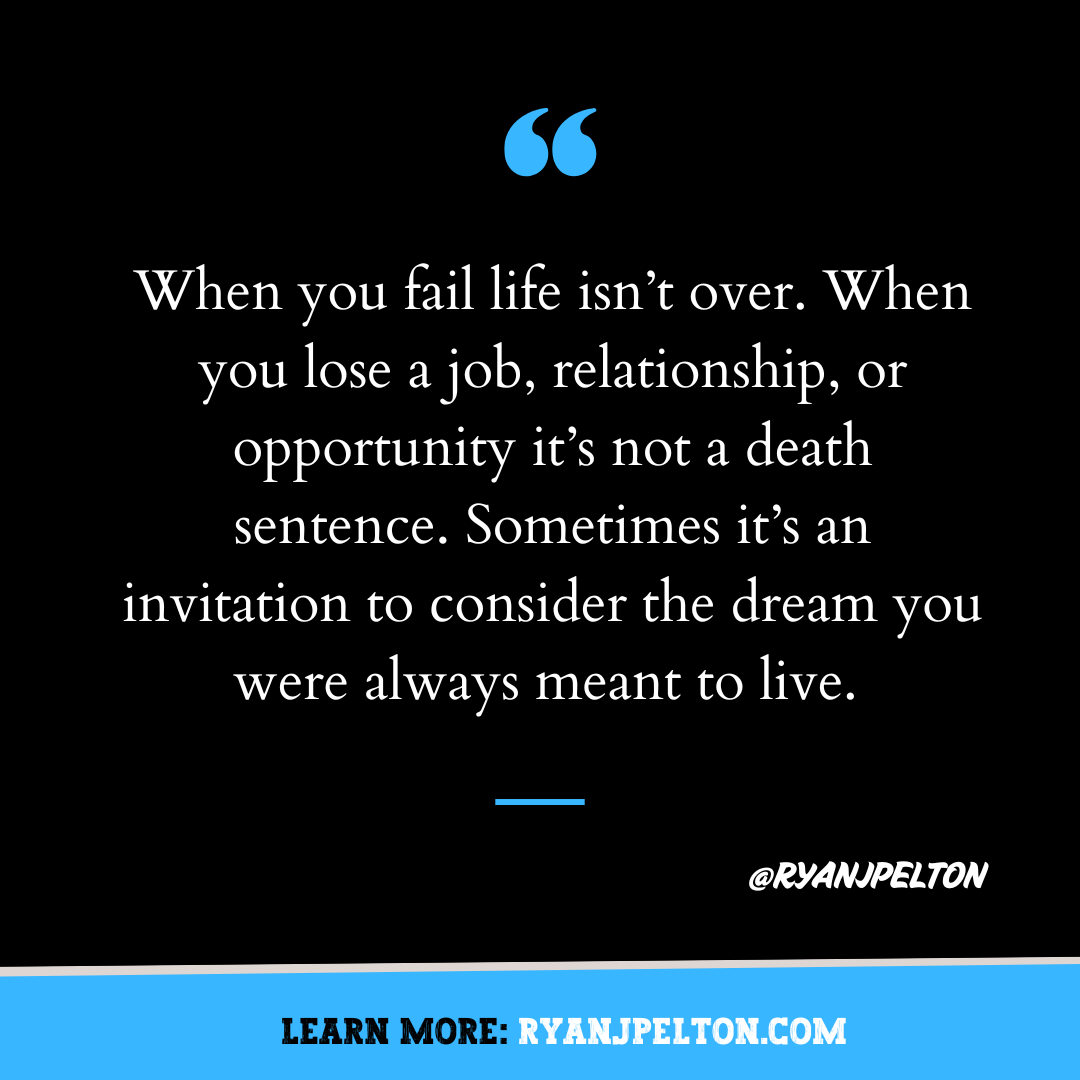
  • Sometimes it takes a tragedy, set back, or loss to realize…

    The dreams we were dreaming…. were not our dreams.

    The ladders we were climbing… were on the wrong buildings.

    The people in our corner… were actually an obstacle.

    The voices of Truth… were wrapped in Lies.

    → 1:34 PM, Jan 16
  • Jesus-Style-Leadership

    Study the life of Jesus. One thing becomes obvious:

    Jesus was not concerned with winning.

    Winning arguments.

    Winning power over others.

    Winning popularity contests.

    Winning followers with manipulation.

    Winning political leverage.

    Jesus didn’t see life as a competition to be won. He didn’t imagine the Kingdom of God as a world of winners and losers.

    Jesus’ vision for the Good Life and the Kingdom were less competitive, and more built on the framework of grace, generosity, and sacrifice.

    A vision of leadership culminating in service.

    A life built for the benefit of others.

    In the last days of Jesus’ life, with the cross in view, Jesus made this stunning comment:

    “Jesus called them together and said, “You know that the rulers of the Gentiles lord it over them, and their high officials exercise authority over them. Not so with you. Instead, whoever wants to become great among you must be your servant, and whoever wants to be first must be your slave — just as the Son of Man did not come to be served, but to serve, and to give his life as a ransom for many.” -Matt. 20:25-28

    Life isn’t about control and winning.

    Leadership isn’t about being in front and often requires being comfortable in the backseat.

    Losing our rights and independence for the benefit of others.

    Our time needs leaders to lead well and lead for others.

    Lead like Jesus.

    Be like Jesus.

    → 2:01 PM, Jan 15
  • People don’t care how much you know until they know how much you care.-John C. Maxwell

    We can get away with expertise, knowledge, and information as a front door.

    But caring invites us into the living room.

    → 9:23 PM, Jan 14
  • Maya Angelou on Doing Good

    Maya Angelou on doing good:

    “I’m convinced of this: Good done anywhere is good done everywhere. For a change, start by speaking to people rather than walking by them like they’re stones that don’t matter. As long as you’re breathing, it’s never too late to do some good.”

    In our moment, our current political, and wildfires in LA moment… we need more of this.

    Leadership = doing good for all.

    → 6:44 PM, Jan 13
  • Smoldering Down by Amanda Gorman

    I live in Los Angeles. Art is what we need.

    ––––––––––––––––––––––––––––––

    All our angels have gone. In this smoldering dawn we soldier on.

    We proved ourselves strong.

    Not by how badly we’ve burned. But how bravely we bond.

    Apocalypse does not mean ruin But revelation.

    In devastation this infurnus has injured us but it cannot

    Ensure us even in the surreal, we do not surrender.

    We emerge from the embers.

    The hardest part is not disaster, but the after.

    Scorched earth is where the Heart hurts.

    What we restore first where We start the work.

    Today we mourn.

    Tomorrow reborn.

    We end the burning. Befriend the hurting.

    Mend those who face the flame.

    We reclaim our city’s name

    A revelation that is only this place tells:

    To find our angels, all we need to do Is look within ourselves.”

    Smoldering Dawn by Amanda Gorman

    → 7:28 PM, Jan 12
  • Good leaders don’t restrict their teams; they release them. -John Maxwell

    I wonder how this principle applied to politics would change many things? Applied to business, churches, and families what are the implications?

    Too much restriction in our day.

    → 9:59 PM, Jan 11
  • Resume Virtues vs. Eulogy Virtues

    I’ve taken part in dozens of funerals. Attending services for close friends and family members. I’ve given eulogies and said prayers. Today we buried my step-grandfather.

    I’m not sure what it is about funerals, but I never leave the same. I find myself reflecting on this one precious life. I wonder if my life is all it could be. What would my kids say about me if I died tomorrow, or next year?

    When I listen to the pastors, priests, or family members speak of their loved ones with glowing memories. I wonder what my closest friends or wife would say about my five minutes on earth?

    Driving home from the funeral reminded me of David Brooks book, _The Road to Character._ In fact, I think about this idea he crafted every time I leave a funeral. He introduced a thought-provoking concept:

    Resume Virtues vs. Eulogy Virtues

    Resume virtues are the skills and achievements you list on your resume — those experiences you feel make you hirable. Those accomplishments, educational milestones, and career successes we believe validate our existence.

    Eulogy virtues are the qualities people speak about at your funeral—your kindness, humor, humility, bravery, and ability to inspire others. I loved hearing one of the grandkids talk about the leadership of our step-grandfather during the Korean War. Later in his work in aviation. These virtues shape your character and define the legacy you leave behind.

    Typically, these virtues are remembered long after the resume virtues fade into oblivion.

    Brooks suggests modern culture has an unhealthy emphasis on resume virtues at the expense of eulogy virtues. From a young age, we’re encouraged to focus on building successful careers, hustle, grind, chase accolades, and “win” in life.

    Yet, when people reflect on their lives, it’s the eulogy virtues that often hold the most significance. I can attest to this today going to my grandfather’s funeral. People spoke of presence, and teaching them how to hook a fish, and hunt a deer. The times grandma and grandpa sang song during family gatherings.

    These eulogy traits are often the unseen stuff. The interactions with family and community and church. The quiet ways they served their families and community. Like grandpa getting a second job to put the kids through Catholic school. These eulogy traits answer deeper questions about who we were as individuals, how we treated others, and what kind of impact we made on the world.

    So, driving home, I thought about eulogy traits. What impact do I want to leave behind? Is it awards, and milestones, and accolades on a resume?

    Or, things like courage, presence, love, and humility?

    I pray for the latter.

    → 9:33 PM, Jan 10
  • Path to Craft

    Jon Acuff, said in All it Takes is a Goal, if you want to get good at something, or turn something you enjoy into a craft, ask yourselves questions like this:

    Can I do it better? Can I do it faster? Can I make it more enjoyable? Can I do it in fewer steps? Can I create something new if I add or remove a part? Can I measure and track my performance?

    → 1:30 PM, Jan 9
  • Premium Mediocre

    We live in a world of Premium Mediocre.

    The illusion things are more fancy, special, and VIP than reality suggests.

    Venkatesh Rao, said this in The Premium Mediocre Life of Maya Millennial:

    “Premium mediocre is the finest bottle of wine at Olive Garden. Premium mediocre is cupcakes and froyo. Premium mediocre is “truffle” oil on anything (no actual truffles are harmed in the making of “truffle” oil), and extra-leg-room seats in Economy. Premium mediocre is cruise ships, artisan pizza, Game of Thrones, and The Bellagio.”

    Premium Mediocre is the illusion of need. Feeds on our lack.

    We need these things because they are better than the rest. We need these things because our lives are lacking, and will not be complete until you have the VIP tickets to the Oasis concert. Or the premium streaming package in 4K on four screens.

    Premium Mediocre is smokescreens to reality.

    PM is the killer of doing our best work. Making things that actually meet a need, and solve problems, and are forever premium.

    Don’t fall into the trap of Premium Mediocre.

    We need your Art.

    → 8:13 AM, Jan 8
  • Abstracts for the World

    In the speaking world, an abstract summarizes who you are, what you speak on, and how you can help your audience.

    These summaries help event planners hire speakers based on the needs of the event, workshop, or seminar.

    **The grounding question being: **

    How can this person help our organization solve a problem, inspire us, educate us, and/or build morale for our company, association, or community?

    We all have an abstract. Everyone brings experiences, gifts, skills, and art to the world. We all solve problems of various kinds.

    I wonder if we should all write an abstract? You don’t need to be a speaker to do this.

    Do you know why you’re here, what you do, and the art you make to help the world?

    Do it, write a one-page abstract.

    Answer these questions:

    1. Who am I? What am I here for?
    2. What expertise, skills, gifts, and art do I bring to the world?
    3. What problems can/have I solved in the past? What problems do I hope to solve in the future?
    4. How can I help others today?
    → 8:01 AM, Jan 7
  • Be Useful in 2025

    Arnold Schwarzenegger wrote a book. Yes, the muscled action star from Austria is sharing his wisdom on being successful in the modern age.

    His advice is simple:

    _Be useful. _

    What if we made this our New Year’s Resolution in 2025?

    How can I be useful today?

    How can I make things better for those around me today?

    → 4:29 PM, Jan 6
  • Subtraction

    The path of reaching goals, doing our best work, and making great art requires subtraction.

    Often we think: I need to add. I need to buy. I’ll need longer hours.

    Sometimes this is true.

    You might need more learning, or research, or mentoring before you start. More hours to make the thing.

    But more often than not, we need subtraction.

    Writing the next book will require removing Netflix, social media, and unnecessary social gatherings from our daily orbit.

    If wanting to be a present parent, it will require fewer hours at the office, less travel, and fewer hobbies.

    Pursuing a healthy lifestyle it will require subtracting late nights, fast food, toxic substances and relationships, and doom scrolling news.

    In cultivating a peaceful soul, it will require less noise and more stillness.

    What are you removing today?

    → 7:19 AM, Jan 5
  • Marketing Is

    Marketing is not a curse word.

    Marketing is all of us.

    Marketing is storytelling.

    Humans are storytellers.

    Marketing is saying: here I am, here is this thing I made, here is why I made it, here is why I think it can help, would you like to try it?

    Marketing isn’t sales. The selling is a byproduct of a compelling story.

    Marketing is about a story.

    Every brand, community, person, philosophy, or religion has a foundational story.

    We all tell stories, and we’re all marketers. Some stories are more interesting than others, and some are more helpful.

    But, all good marketing stories follow a typical pattern:

    • A clear beginning, middle, and end
    • A conflict or challenge or problem to overcome
    • A character/human/community needing transformation
    • A resolution/solution that ties to the brands offering/product/service/story

    This is marketing.

    How can we tell better stories?

    → 8:08 AM, Jan 4
  • The Sacred Art of Creating

    We’re surrounded by spreadsheets and metrics, drowning in data while starving for meaning. We hustle and grind working for someone else’s dream.

    Art and spirituality aren’t luxury add-ons to a “successful” life—they’re essential nutrients our souls require to thrive.

    Our art by way of reminder, is about contribution, doing the courageous thing, our offering, prayer, and gifts we bring to the world. Some art is obvious: painting, writing, and dancing. Other forms of art are subtle: making laws for communities to thrive, and offering counseling for recovery drug addicts.

    Art is how we make sense of ourselves, God, and the world.

    Consider the cave paintings at Lascaux. Our ancestors didn’t paint bison on cave walls to improve their quarterly hunting metrics. Boost revenue for second quarter. They painted to connect with something larger than themselves, to make sense of their place in the world.

    That artist-hunger hasn’t changed. It won’t, can’t, it will never run out of steam because we’re made by The Divine Artist.

    When we create art—whether it’s a painting, writing a song, making a business plan, or a simple doodle—we’re taking part in an ancient ritual of meaning-making.

    We’re saying: “I was here, I noticed this, it mattered to me. I made this for you. Thank you, God.”

    Spirituality, which finds its roots in Spirit, gives us a framework for understanding why it matters. A lens by which we view our creative acts as more than just self-expression—they become bridges between the visible and invisible.

    Spirit grounds us and tethers us to greater realities. Reminding us we are here doing these human things, and having these human experiences, and it all matters, and it’s all grace.

    The marketplace wants to commodify everything, to turn every human activity into a transaction. Make our lives manageable and measurable. But art and spirituality resist this reduction.

    Spirit and Art remind us that not everything that counts can be counted, that some forms of value can’t be captured in a P&L statement.

    The real question isn’t whether we can afford to make time for art and spirituality. It’s whether we can afford not to. A good chance we’re already caught up in it, and just need eyes to see.

    It’s not a question if art and spirituality are divergent things. They are dance partners, one needing the other.

    Because without them, we’re just efficient machines processing inputs and outputs. And that’s not why we’re here. We’re not machines.

    We are artists.

    → 1:47 PM, Jan 3
  • RSS
  • JSON Feed
  • Micro.blog